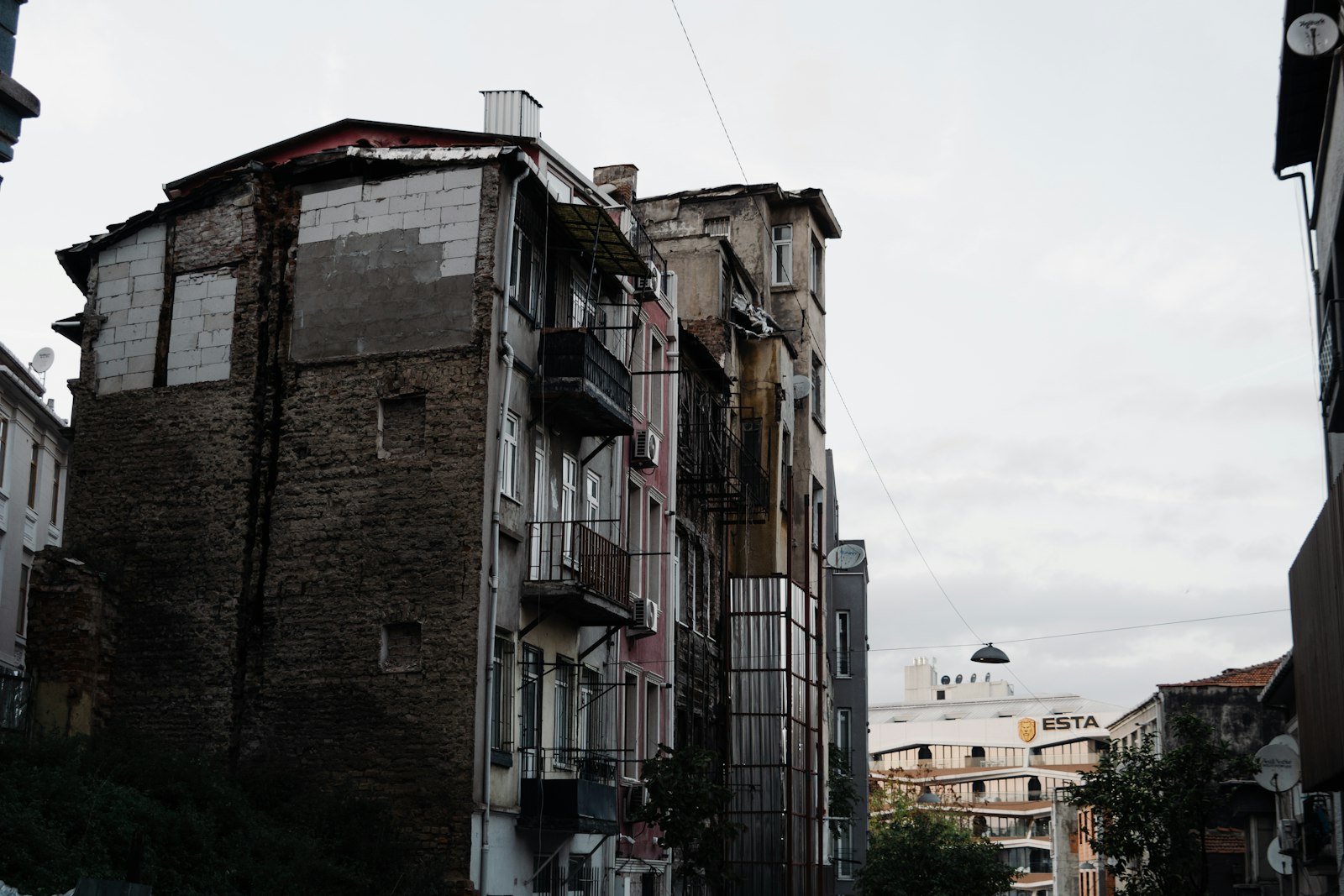
A flat in a building heading for urban transformation can be a real opportunity in the right building and for the right buyer. In the wrong building it is a share that earns no rent for years, is hard to sell and is decided by other people. The price does not tell you which one you are looking at. The annotation on the title deed, the flat's land share, where the owners stand and the content of the contract do.
You have probably seen the listing. The price is well below similar flats nearby and the description has one line: "The building will go into urban transformation." The obvious question is whether the discount is an opportunity or whether it is hiding something. In this article I explain what that discount actually prices, the decision rule that changed in 2023, what a buyer needs to know about fees and state support, and the seven documents to check before signing.
Why is the flat cheap?
The discount does not come from one source. The seller has to price in three costs that the buyer takes over:
- Waiting time. During demolition, permits and construction there is no flat. Your money is tied up, but there is nothing to live in or rent out. Under the Half From Us campaign, loan repayments only start two years after the building permit, which suggests construction is expected to take at least that long.
- Lost rent and moving costs. Once the building is vacated, an owner who lived there pays rent elsewhere. State rent support covers part of this, not all of it.
- Uncertainty. Who will the contractor be, how many square metres will you get in the new building, when will the owners agree? The less clear these answers are, the bigger the discount.
So the discount is not free money; it is the price of these three risks. An opportunity only exists when, for you, these risks are smaller than the seller has priced in.
What does the "risky building" annotation on the title deed mean?
Under Law No. 6306 on the Transformation of Areas Under Disaster Risk, whether a building is risky is decided by a report from a licensed firm, approved by the authorities. Once the report is approved, a "risky building" annotation is entered in the land register. Owners are notified and have 15 days to object. If there is no objection, or it is rejected, the finding becomes final and owners are given a period to vacate the building.
The annotation does not block a sale. But anyone who looks at the title deed sees that the building is risky, and you are deemed to have bought with that knowledge. There are two different situations here:
- If there is an annotation: the process has officially started. Check the report date and whether the vacating period is running.
- If there is no annotation but the listing says "will go into transformation": often there is only an intention. The building has not been declared risky yet and the owners are still talking. The discount may be pricing the longest part of the wait.
Decisions are now taken by a simple majority
This is the change buyers miss most often. Law No. 7471 of 7 November 2023 amended Article 6 of Law No. 6306. To demolish and rebuild a risky building, a two-thirds majority of owners used to be required. Now a simple majority in proportion to their shares is enough.
For a buyer this has two consequences. The good side: buildings that used to be locked for years by a few holdouts can now move faster. The other side: the share of an owner who does not join the decision can be sold by auction, first to the other owners, at no less than market value. So if you buy a flat and a contractor or contract you do not like is chosen by a simple majority, you either go along with it or your share is sold through a process you did not choose.
How many square metres will you get in the new building? The land share
The size of the flat you receive after transformation is set by the land share on the title deed, not by the size of your current flat. The flat-for-land agreement with the contractor is also divided between owners according to their land shares.
An example: imagine two flats of the same size in the same building. One has a land share of 50/1000, the other 30/1000. Today they may sell for the same price. In the new building, however, the first flat's entitlement is roughly 67 percent larger. Comparing prices by square metre is the most common miscalculation with these flats.
The land share is written on the title deed. Dividing it by the building's total land share before you buy gives a rough measure of your entitlement. The exact figure depends on the zoning status and the contractor agreement.
Fee exemption: when the seller bought matters
Article 7/9-a of Law No. 6306 exempts the first sale of a risky building before its transformation from title deed fee. There is a fine point here. In a ruling dated 7 August 2026, the Revenue Administration treated the first sale after the annotation of a share bought before the annotation as exempt. The resale of a share bought after the annotation was treated as a "second sale" and made subject to the normal title deed fee.
In practice: two flats in the same building may be offered at the same price, but if one seller bought before the annotation and the other after, the buyer's fee will differ. Comparing the acquisition date on the title deed with the annotation date takes a few minutes.
State support: who qualifies and who does not?
There are two main forms of support for buildings in transformation:
| Support | Amount | Conditions and duration |
|---|---|---|
| Rent support | Set by the Ministry per province | Monthly for owners for up to 18 months, one-off for tenants. Can be longer in risky and reserve areas |
| Half From Us grant | 875,000 TL | Per home, non-repayable |
| Half From Us loan | 875,000 TL | Repayment starts 2 years after the permit. Instalment cannot exceed 70 percent of household income |
| Moving support | 125,000 TL | Under Half From Us |
The Half From Us campaign covers Istanbul, Izmir, Kocaeli, Sakarya, Manisa and Tekirdağ and ends on 31 December 2026. The building must be declared risky by that date. The applicant must not have an ongoing enforcement or seizure record.
The key question for a buyer: can someone who became an owner after the annotation benefit from this support? Eligibility can depend on the building, the date of the finding and when the person became an owner. Do not value the flat on the seller's line that "there is state support too". Before buying, get written confirmation for your own situation from the Provincial Directorate of Environment, Urbanisation and Climate Change.
5 situations that look cheap but turn out expensive
- A flat with a low land share. A flat that looks spacious today can turn into a small entitlement in the new building. Compare prices by land share, not square metres.
- A building with no contractor yet. There can be years between "will go into transformation" and "contract signed with a contractor". Check whether the discount is big enough for that uncertainty.
- No written flat-for-land ratio. In buildings moving forward on a verbal understanding, the ratio can change at the last minute. The draft contract should state clearly how many flats and square metres go to the owners.
- A mortgaged or seized title deed. Under Law No. 6306 the process can go ahead despite encumbrances, but that burden can carry over to the new flat. Have every record on the title cleared before the sale.
- Owners who have been deadlocked for years. The simple majority rule speeds things up, but lawsuits and objections can still extend the wait. Ask whether any case has been filed about the building.
Checklist before you sign
- Title deed record. Risky building annotation, annotation date, land share, seller's acquisition date, mortgage and seizure records.
- Risk report and finality. Report date, whether there was an objection, the vacating period.
- Owners' meeting decision. Was a simple majority reached, and with which contractor and ratio?
- Draft contractor agreement. Number of flats and square metres for owners, delivery time, late-delivery penalty, guarantees.
- Zoning status. Floor area ratio and number of storeys for the new building. The larger the total construction area, the larger the owners' share.
- Support eligibility. Written confirmation from the Provincial Directorate for rent support and Half From Us in your situation.
- Fee status. Whether the seller bought before or after the annotation. This date changes the fee you pay.
Who is it an opportunity for, and who is it a trap for?
| Buyer profile | Assessment |
|---|---|
| Cash investor who can wait years without rental income | Can be an opportunity, in a building with a high land share and owners in agreement |
| Existing owner buying a second flat in the same building | Favourable. More weight in negotiations, knows the building and neighbours |
| Family planning to move in now | Not suitable. A vacating order can come at any time |
| Buyer planning to let the flat | Risky. Rental period is uncertain, tenants are harder to find |
| Buyer using a mortgage | Difficult. Banks are reluctant to lend on risky buildings, and instalments run throughout construction |
In short, a flat in a building slated for transformation is not a home; it is a contract. The building and the paperwork set its price, not the listing. If you would like me to go through the title deed record, land share and draft contract of a flat you are considering, write to me. If you would like professional guidance, feel free to get in touch.
Frequently asked questions
Can you buy a flat in a building with a risky building annotation on the title deed?
How many owners must agree for an urban transformation decision in Turkey?
Is title deed fee paid when buying a flat in a risky building?
Does the Half From Us campaign apply in Izmir and how much support is given?
Is a flat slated for urban transformation a good investment?
Decision majority: Law No. 6306, Article 6, as amended by Law No. 7471 (7 November 2023). Hukuki Haber.
Fee exemption: Law No. 6306, Article 7/9-a. Revenue Administration, Aydın Tax Office private ruling, 07.08.2026. Alo Maliye, 10.09.2026.
Half From Us amounts and deadline: Milliyet, Dünya.
Rent support durations: CNN Türk. The monthly amount is set per province by the Ministry and sources give different figures, so no amount is quoted.
The land share example is my own calculation.
Cover image: Istanbul. Chris Johnson, Unsplash.
This article is for general information and is not legal or investment advice. Before buying a flat in a risky building, I recommend having the title deed record and draft contract reviewed by a lawyer.