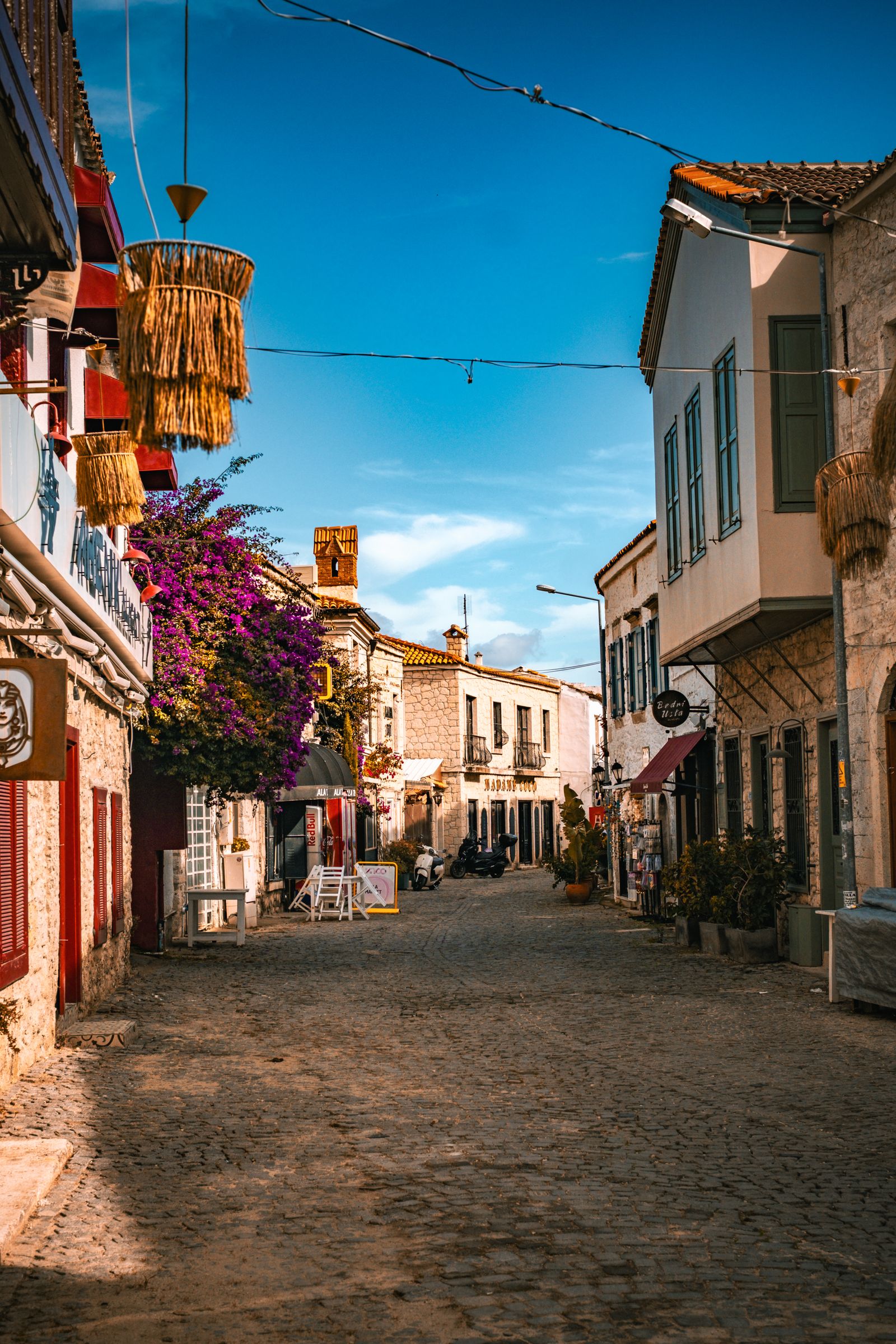
For years, Çeşme was filed away as Izmir's summer playground. That description no longer captures what is happening on the ground. Çeşme now holds a year-round population, leads short-term rental performance on the Aegean, and has settled into a premium pricing tier driven by foreign demand. On the coastline we are looking at projects where per-square-metre prices have crossed 200,000 TL; in the interior, entry-level windows still sit in the 50,000 to 60,000 TL band. There is no single Çeşme to speak of.
Here is the point that matters. Çeşme is not one market. Alaçatı's brand and Germiyan's accessibility do not target the same investor. The yield math of a luxury apartment in Boyalık works nothing like the math of a short-rental villa in Ovacık. The vineyard-house concept in Şifne and the detached villa in Reisdere barely share a buyer profile. For an investor, getting the right answer comes down to reading these differences and choosing an area based on numbers, not instinct.
In this piece I put seven Çeşme sub-areas on the table through an investor's lens. Which area fits which profile, which one has matured and is losing momentum, which one still holds its price advantage in 2026; I walk through it with data and field observation. Alongside that I bring in foreign demand, the citizenship window, and the coastal parcel restrictions. Because in Çeşme, picking the right area alone is no longer enough; picking the right parcel inside the right area now directly shapes the return on your investment.
1. The 2026 Picture of the Çeşme Market
Across Turkey, the housing market keeps growing in nominal terms, but the real gain varies sharply by region. TCMB's January 2026 Housing Price Index posted an annual nominal increase of 29.8%. According to Endeksa and Emlakjet data, Turkey's average price per square metre as of March 2026 sits at 40,380 TL/m²; the average home value is around 5,047,500 TL. That is the country baseline.
The coastline runs far above that average. EVA data points to a real appreciation of 20% to 25% along the Aegean and Mediterranean coast over the last year. Çeşme is one of the strongest players within that coastal band. The district's average monthly rent has climbed to 42,996 TL; that figure is more than three times the national rental average.
Three structural dynamics set Çeşme apart from other coastal districts. First, short-term rental income makes up more than 60% of annual investment yield. Second, foreign buyer demand is predominantly European and concentrated in higher budgets. Third, the price gap between high-brand sub-areas and the developing interior gives investors a rare manoeuvring room. In 2026, the investor who picks the right area earns simultaneously from capital appreciation and seasonal rental economics.
Looking at the summer rental figures released in May 2026, Çeşme's average monthly summer rent reached 69,164 TL. That number sits well above the year-round average, because summer-season pricing in Çeşme runs two to three times higher than the rest of the year. That spread explains why short-term rental operations are so decisive here. A well-managed property's summer income alone can comfortably cover half of the annual return target.
2. Alaçatı: Mature Premium, Slowing Momentum
Alaçatı is Çeşme's international brand. Stone-house architecture, a boutique-hotel culture, premium beach clubs, and a European clientele pushed pricing here above standard market levels years ago. Today, Alaçatı's average rent is 50,762 TL per month. On premium villas, the price per square metre has crossed 200,000 TL; on prime locations and branded projects, the figure climbs further still.
Here is the point the investor needs to read carefully. Alaçatı is a mature market. Brand equity is high, demand is steady, short-term rents are strong; but capital appreciation momentum has slowed. When you run net annual yield math against the high entry cost, the gross rental yield ratio comes in below other Çeşme areas. In other words, monthly rent is high, but the property price is disproportionately higher.
In my view, Alaçatı suits a specific profile: an investor who values capital preservation above capital growth, wants to use the property personally, and weighs prestige of address alongside seasonal income. A first-time investor or one chasing aggressive short- to mid-term returns will struggle to feel comfortable in Alaçatı. This is a place where you buy ownership; it is preferred not for raw numerical yield, but for the comfort of brand equity and long-term capital resilience.
3. Boyalık and Paşalimanı: The New Address of the Luxury Segment
Close to Çeşme centre, with sea views and a concentration of branded projects, the Boyalık and Paşalimanı corridor has recently emerged as an alternative to Alaçatı's premium position. The concept shifts here. Where Alaçatı sells stone houses and boutique architecture, Boyalık sells modern, gated, secure, pool-equipped, beachfront or near-beachfront living.
Investment decisions in this corridor usually rest on three motivations. First, building stock is young and technical infrastructure is new. Second, for luxury-segment short-term tenants, on-site amenities are decisive. Third, foreign buyers favour turnkey-ready projects with a management layer in place. When these three line up, Boyalık prices have climbed fast over the last two years; but the area has not yet reached Alaçatı's maturity level. That means appreciation potential is still on the table. Walking distance to Çeşme centre and proximity to the marina also act as structural supports for Boyalık pricing.
The critical point for the investor: project selection in Boyalık is decisive. A unit inside a branded site and an independent unit on the same street diverge meaningfully in both sale price and rental potential. Site management, common-area quality, operators offering short-rental management; these details directly shape the yield math in Boyalık. A branded project and an ordinary building do not earn the same money in the same area. The foreign buyer's expectation of a turnkey-ready property channels demand toward operator-managed projects, and that creates a visible price gap.
4. Ovacık: The Rental Yield Leader
Ovacık has been Çeşme's standout area of the last three years. According to Endeksa, the average residential sale price in Ovacık sits at 10,272,591 TL, with an average price per square metre of 86,605 TL; price growth is now running at 2% per month. Annualised, that puts Ovacık ahead of most other Çeşme areas on momentum.
What makes Ovacık special in an investor's eyes is not just price growth; the deeper story is rental yield. In short-term seasonal rentals, certain villa segments in Ovacık see a floor rate of 80,000 to 200,000 TL per week. A well-located, pool-equipped, professionally managed villa can produce a total summer-season income of up to 800,000 TL. That single season represents 7% to 8% of the property's value.
When capital appreciation and rental yield overlap in the same area, payback periods compress. For Çeşme's villa segment, a payback period of 14 to 16 years is typical; for a well-managed and correctly priced Ovacık villa, that figure can drop to 10 to 12 years. On Turkey's residential investment map, that is a genuinely notable number.
5. Reisdere and Dalyan: The Heart of the Villa Segment
The Reisdere and Dalyan corridor sits at the centre of Çeşme's villa and detached-house market. According to Endeksa, the average detached-home value in Reisdere is 17,049,572 TL; apartment-segment entry prices start at 5,500,000 TL, while villa-segment entry sits around 11,750,000 TL. Those numbers confirm the area has settled into a clear villa market.
The dynamic in Reisdere and Dalyan reads like this. Rather than seasonal tourist flow, buyers targeting year-round use cluster here. Marina users, those choosing Çeşme as a second home, profiles spending the entire summer here and visiting through winter; these segments hold the price floor. As a result, seasonal demand swings hit this corridor less than other Çeşme areas.
For an investor looking at the villa segment, Reisdere and Dalyan offer three advantages. First, parcel sizes run larger, with more space for garden and pool. Second, proximity to both the main artery and the marina supports use-case diversity. Third, year-round occupancy is more balanced, which makes short- to mid-term rental operations more sustainable. For a premium villa target, this corridor stands out as one of Çeşme's most structurally sound areas.
Reisdere's price segmentation also opens multiple doors for an investor. The apartment side keeps an accessible entry while the villa side spans a meaningful range. For a budget-limited investor, starting with apartments and rotating into a villa over the mid-term is a sensible portfolio-diversification path. The year-round support coming from marina proximity also keeps that strategy financially viable.
6. Şifne and Ildırı: The Quietly Appreciating Corridor
East of Çeşme, Şifne and Ildırı make up a corridor that flies under the radar but is gaining value fast. Enriched by thermal springs, vineyard roads, old Greek village architecture and an ancient layer of history, this area sat outside the conventional tourist flow for years; pricing stayed low. That changed over the last two years.
The investment story in Şifne and Ildırı reads like this. After saturation in the luxury segment, buyers started looking for something quieter, more natural, less crowded. Boutique-hotel investors, architects developing vineyard-house concepts, and retirees planning year-round residence all began turning toward this corridor. As demand shifted, pricing caught traction; vineyard parcels and old buildings with restoration potential now attract particular investor attention.
This corridor is the right answer for a patient investor. The short-term rental economy is nowhere near as mature as Ovacık's; but over the mid-term, the odds of capital appreciation outpacing the Çeşme average are high. I expect the early investor in this corridor to see satisfying results over a 5-year horizon; but this is a value-accumulating position, not an immediately income-generating one.
7. Germiyan: Accessible Price, Long-Horizon Angle
Germiyan sits in Çeşme's inland area, preserves its traditional character, and remains the only sub-area still holding a real price advantage. There is no luxury-segment or beachfront pricing premium here; but the area still draws on Çeşme's brand equity. That combination opens a meaningful entry point for the mid-budget investor.
The buyer profile in Germiyan has shifted recently. Previously dominated by local and regional buyers, the area now draws interest from Izmir and Istanbul-based buyers who want to own in Çeşme but cannot stretch to an Alaçatı budget. This new wave of demand is pulling prices upward; but the current floor remains accessible.
For the investor, the angle on Germiyan reads like this. In the short term it does not share Ovacık's slice of short-term rental economics; but over a 5 to 7-year horizon, I expect appreciation in line with Çeşme's brand prestige spreading downward through the market. This is not a "fast result" position; it is "entering at the right time on the right side." For a budget-limited investor targeting long-term capital growth, Germiyan remains the most rational way to buy into the Çeşme brand today.
There is another dimension worth weighing in Germiyan: the ratio of land plots to detached buildings. The area developed on a parcel-based footprint, so single- and two-storey structures dominate the stock. Many of these can be renovated or repositioned mid-term into boutique accommodation. A property purchased in Germiyan opens room for the investor not only at today's value, but at the value it could reach after restoration or concept conversion. Entering with that angle in mind materially changes the yield math in the area.
8. Foreign Demand and the Citizenship Window
Foreign demand is a parameter Çeşme investment analysis cannot ignore. According to TÜİK's February 2026 data, sales of housing to foreign buyers across Turkey came in at 1,506 units; that figure represents a 2.9% annual decline. The picture is sharper for Izmir: in March 2026, just 24 housing units were sold to foreigners in the city, a 41.5% drop year on year. The visible drivers are the tightening of citizenship conditions and a relatively more stable foreign exchange band.
The real-estate route to Turkish citizenship remains open, but the conditions are well defined. A minimum 400,000 USD-equivalent property investment, a three-year non-sale commitment, and the issuance of a Foreign Exchange Purchase Certificate (DAB) are mandatory. Without all three, the citizenship route stays closed. Çeşme's premium segment offers pricing well-suited to the citizenship budget; but the investor needs to look not only for a property at the citizenship price point, but one that produces income while held for three years.
Here is the point that matters. On certain Çeşme coastal parcels, military security zone restrictions create an additional control layer for foreign buyers. Under Turkish property law, foreign acquisition in some areas is either subject to special permit or restricted altogether. For that reason, foreign-buyer management in Çeşme specifically requires checking parcel-level permit status upfront, alongside budget and segment. The citizenship and foreign-demand window is open; but this is not a market to enter without parcel-level preparation.
Looking at Çeşme investment through a 2026 lens, the picture lines up like this. Mature premium for the investor seeking it: Alaçatı. Modern luxury and branded projects: Boyalık and Paşalimanı. The peak of short-term rental economics: Ovacık. Stable year-round villa use: Reisdere and Dalyan. Patient mid-term appreciation: Şifne and Ildırı. Budget-friendly long-term entry: Germiyan. Each carries its own yield math, its own buyer profile, and its own risk map. Coastal dynamics and the foreign-demand window add even more variables to the equation. Choosing the right area alone is no longer enough; right area, right parcel, right typology, and right timing together are what make Çeşme investment genuinely deliver.
In maturing markets like Çeşme, area selection directly shapes investment return. For a regional analysis and portfolio strategy that fits your investor profile, you can reach me through the contact page.
Get in Touch